From the archive · 2017
A Beginner's Guide to Growth Hacking
From the archive — written in 2017, still true.
A note from 2026: “growth hacking” is now mostly called “GTM” — but the ideas below haven’t aged a day. The terminology moved; the discipline didn’t.
Most marketers agree that growth hacking is the future of marketing; others think it’s a fad. Here’s some news: the best companies — Facebook, Airbnb, Uber — have had growth teams for years, and interest in growth hacking has climbed steadily since 2012.
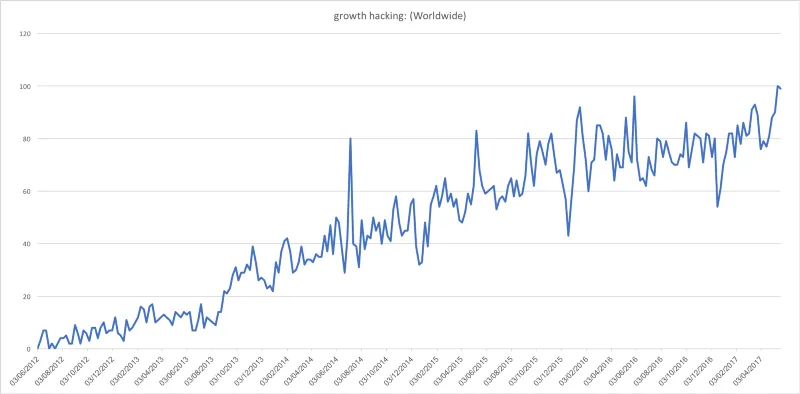
Those big guys understand that in today’s digital world
- Marketing and development go hand in hand if you’re looking for sustainable growth.
- Everything can be tracked and measured — which means intuition has low value. Skills matter more than experience.
- Speed is the main competitive advantage, so large campaigns must be replaced by rapid experimentation — and those experiments must impact the full customer journey.
- Outsmarting the competition beats outspending it.
- ROI comes from focusing on the right metrics.
It’s one thing to understand where the industry is going, another to act on it, and yet another to operate a successful transformation.
Why companies fail
Here’s the list of challenges we see when companies start implementing the growth methodology:
- A lack of understanding of what growth hacking is truly about.
- A lack of technical skills in the marketing department.
- A lack of marketing skills in the technical department.
- Marketing effort spent almost exclusively on top-of-funnel actions.
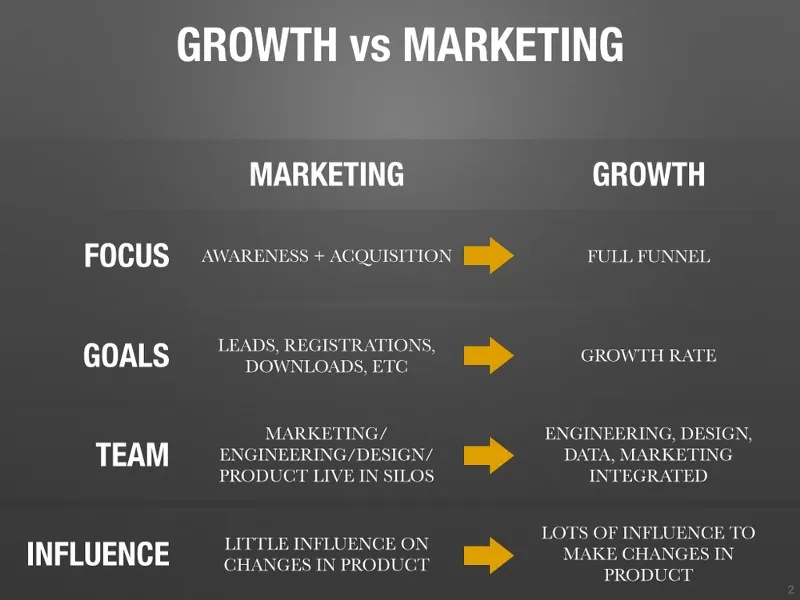
Growth marketers focus on delivering delightful customer experiences at every stage of the funnel — because they know that pouring water into a leaky bucket leads to a big waste of time and money.
This is the clearest way to see the difference between traditional (digital) marketing and growth: it’s not the channels, it’s the focus, the goals, the team, and how much influence that team has over the product.
The difference shows up in the results, too. Traditional marketing skills only get you so far; teams that don’t start using new technology to make their marketing more efficient eventually plateau — while the ones that do compound.
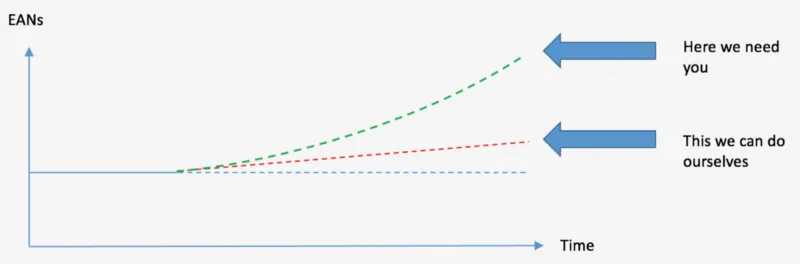
Our focus has always been on unlocking a company’s growth through both strategy and execution — but we also believe we have a role to play in helping leaders understand how the marketing and advertising industry is being disrupted by new technology, and how to adapt quickly. From experience, that understanding doesn’t happen in a 30-minute meeting, an hour, or even a single day.
Learning it, hands-on
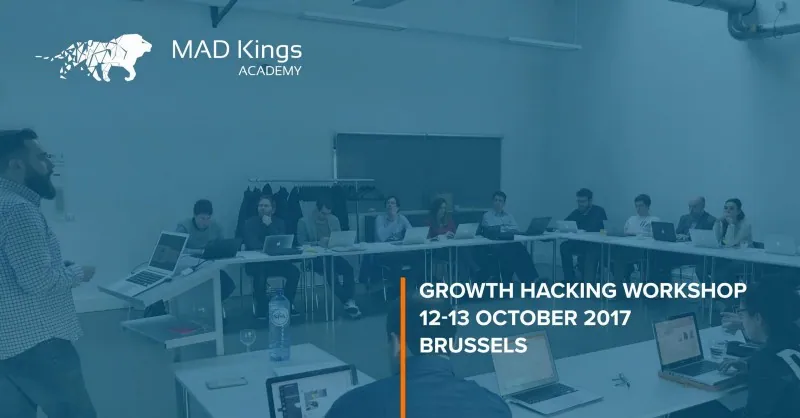
Back in 2017 we ran a 2-day Growth Hacking Workshop in Brussels to give marketers and entrepreneurs a holistic, no-bullshit view of the discipline — analytics, user psychology, automation and creative tactics — and send them home with an actionable, step-by-step plan to grow their business.
What the discipline actually is
Whether you call it growth hacking, growth marketing, or GTM, the job is the same: a holistic, no-bullshit view of the funnel, turned into an actionable, step-by-step plan — using analytics, user psychology, automation and creative tactics to grow a business.
That’s the leaky-bucket instinct, and it’s the whole game: find where the funnel leaks, run the cheapest experiment that could fix it, measure honestly, and repeat.
This post originally promoted MAD Kings’ 2-day Growth Hacking Workshop (2017). The workshop is part of our heritage; the methodology behind it lives on in how we work today.